Monday, June 10, 2019

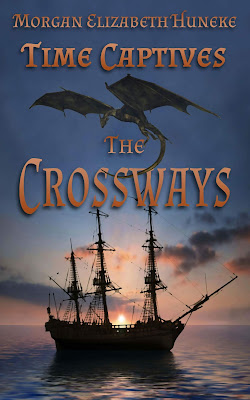
The New Covers For Time Captives Are Here!

The new covers are here!!!

I'm super duper excited about these covers! I also want to give a humongous shout out to Jaye L. Knight. She gave me sooooo much advice as I went through the process of creating these covers, and they would not be what they are without her. She's seriously the best.

Something else big with these editions (and yes, I'm being mean and writing things for you to scroll through before you can see the covers) is that I have my own imprint! I bought a block of ISBNs to use for my books, so now I'm ShireWood Press. It's super exciting to me and I love my ShireWood logo and website. We'll even be using ShireWood Press to publish my great great grandpa's poetry in one volume for the first time later this year. Some cool stuff. :)

http://www.shirewoodpress.com/
Now, here's what you've been waiting for:

http://www.amazon.com/Creighton-Hill-Time-Captives-Book-ebook/dp/B00XV5R5XG/ref=sr_1_2?ie=UTF8&qid=1432040788&sr=8-2&keywords=morgan+elizabeth+huneke
http://www.amazon.com/Crossways-Time-Captives-Book-ebook/dp/B015OTSCJ2/ref=sr_1_1?s=digital-text&ie=UTF8&qid=1442952660&sr=1-1&keywords=time+captives+the+crossways
https://www.amazon.com/Crannig-Castle-Time-Captives-Book-ebook/dp/B01LT8I11Q/ref=sr_1_1?ie=UTF8&qid=1476060595&sr=8-1&keywords=crannig+castle

So what do you think? I personally love the new look, and they're sooooo much better than the old covers. More representative of the story inside.

I'm going to be giving away one set of the brand new paperbacks, so be sure to enter! Giveaway open to U.S. residents only.


I've also put my remaining copies of the 1st edition on sale while supplies last, so while these aren't as pretty as the new ones, it's still an opportunity to get paperback Time Captives books for half off!

Creighton Hill

The Crossways

Crannig Castle

Tuesday, May 28, 2019

Learning About Blindness

The topic of blindness has been of interest to me since I was a small child. I credit Little House (Mary Ingalls), a book my mom read to me about Helen Keller (and later her autobiography), and Seeing Fingers (Louis Braille).

When I began Acktorek, I discovered that Carla, one of my key characters, is blind. It isn't a decision I consciously made—these things rarely are—it just simply is. It's not her defining characteristic. I'd define her more by her musicality, imagination, and selflessness. Her blindness is just a characteristic, like Anne Shirley's red hair. Part of what makes Carla Carla.

Once I'd written the first draft, I realized I really needed to learn more about blindness to portray it accurately. (I can't say I do it perfectly, but I do my best.) As a very nearsighted person, I'm not a stranger to visual impairments, but there's a huge difference between looking at a fuzzy world until you put in your contacts and being completely blind since birth.

I first thought of rereading Helen Keller's autobiography, though she was also deaf (and lived a long time ago), but I ended up not doing that. My friend Kendra recommended I read Light a Single Candle by Beverly Butler, the story of a teenage girl losing her sight, based on the author's own experiences. I read it, loved it, and read the sequel as well. I also, through googling different things related to blindness, came across two useful YouTube channels: The Tommy Edison Experience and Molly Burke. Note: I haven't watched all the videos on either channel, so while all the videos I watched were fine, I can't vouch for content.

Watching these videos, I learned how many misconceptions there are about blindness. As a sighted person, it's hard to comprehend life without vision. There are so many things that we interact with visually that it's hard to comprehend how someone can operate without sight. How a blind person can interact with the same things we rely so heavily on visuals to use. But it's actually not that complicated. It's just different.

Like smartphones and other touchscreen devices. They actually have built in features for the visually impaired. Look at your iPhone settings in the "Accessibility" features. The "Voice Over" feature is really cool. It changes the touch screen commands somewhat to accommodate the features and reads out your screen to you. There's also a "Braille" feature, which I'm assuming is for output to a refreshable Braille display, but those are SUPER expensive, so I couldn't try it out. But yes, a blind person can use a smartphone.

Blind people can enjoy movies. Tommy Edison is "the blind film critique." Some movies have descriptive audio but he chooses not to use it, simply to follow the story via the ordinary audio track. And you know, that's not impossible. He talks a lot about how you can hear people's emotions in their voices. Think about it. You really can hear when someone is smiling, or when they're upset.

I checked out some Braille books from the library. One is a picture book (yes, with regular pictures, still trying to understand that one), and the other is a volume of the Bible. I'd intended just to see what a Braille book looked like, but since the picture book has regular printed English as well as Braille text, I've actually been reading the Braille. So now, I can read some Grade 1 Braille. I'm super slow at it, but I know most of the alphabet and I'm starting to recognize punctuation. It's pretty exciting to me. Now, the Bible is a lot harder to read. Largely because it's in Grade 2 Braille. Basically, Grade 1 is just a 1 for 1 conversion. Grade 2 makes use of abbreviations for certain common syllables as well as some vowel omission for space. Grade 3 is essentially shorthand, but an article I found said that Grade 3 isn't standardized, so it isn't used for official publications. Braille books are a lot harder to come by than print books and are more expensive, but I found a website that sells Braille books (including some of my favorites, like Narnia and Ranger's Apprentice) some for as low as $30. Not all that much more than the standard list price for a new hardback book. But of course, the longer books do cost significantly more. And when you live in the days of text to speech and audiobooks for just about everything, you've really got very open access to the literary world, even if you don't have a refreshable Braille display.

The biggest problem with blindness that I've found through my research isn't in the limitations caused by blindness at all. I mean, sure, there are things a blind person can't do, like drive a car, but there are plenty of things I'm incapable of doing even as a sighted person. The bigger problem is in people's attitudes. Molly Burke addresses this in several videos, such as her "questions not to ask a blind person" videos. She'll be out with a friend, and people ask her if the person is her helper. Or they'll be talking to her, discover she's blind, and proceed to direct all further conversation (about her) to whoever she's with. Blind people are still people who live normal lives. Don't assume because someone can't see that they're less of a person. Their lives aren't of less value just because they can't see. They're just different. And different is good. If we were all the same, the world would be an awfully dull place.

There are so many other ways to interact with the world besides sight. My library is using the system's VR system this month, and one of the experiences we have for it is "Notes on Blindness." It uses the journal of a man (I forget his name) on his experiences with blindness as well as sound effects to give you the experience. It was fascinating just how much was identifiable by the sound. It's so easy to tell the difference between high heels and sneakers just from the sound. Yes, if something is silent and not encountering your other senses, it's basically invisible, but you'd be surprised just how much you can learn from your other senses.

Right now, I can hear the clothes rattling around in the dryer, there must be something with a button or a zipper because I can hear the clattering. The washer was spinning, and is now filling with water. The air condition is running and I can feel the gentle wind from the ceiling fan on my face. When I went to work on the laundry, I could feel when I walked from the carpet onto the hardwood floors through my socks. I knew when I stepped on the rug, and when I was on the linoleum of the laundry room floor. There's no particular smell I'm identifying right now, but I can often tell what's been cooking by the smell. I can usually identify which family member is coming down the stairs by the sound of their footsteps. I can make my bed simply by the feel of it.

Close your eyes, walk around your house, see what you can find out about your surroundings without sight. You'll be surprised. Your brain is already taking in all that information, storing, processing it, it just more than likely takes back burner to your visual stimulation. But it's there. Enhancing your world in ways you may not even realize. All of our senses are amazing. And something I love about writing Carla is learning to experience the world in a completely different, but just as fantastic way.

Monday, May 20, 2019

Almost Done

This is another one of those "I intended to write a blog post, but I was too busy editing Acktorek to actually do it" weeks. I'm getting really close to the end of this draft, which means I can give it to my family to read. (And maybe finally have time to make my Anna dress.) So have another snippet.

P.S. You can still sign up to help spread the word about the new editions of Time Captives. Find the form here.


     She first noticed him when he sat down beside her in math class. He was tall, blond, but other than that, she kept her eyes on her math. Until he said her name.
     “Emma, isn’t it?”
     Emma turned her head to see the young man full on, glancing at her math teacher out of the corner of her eye. Mr. Willman was focused on Chloe, her math-challenged classmate. Emma would be outside of his notice—for better or for worse—for a while yet.
     This young man was new to Gondora Heights Private Academy. She’d gone to school with most of her classmates since she was in kindergarten. And she’d never seen this particular young man before in her life. His face was lean, but not angular, his complexion was fair, his features were well proportioned and his blue eyes were steady. His blond hair just fell over the top of his forehead. He appeared to be well-built and muscular, but not overly bulky. He was naturally dressed in the Gondora Heights uniform: a maroon polo shirt with the school logo embroidered on the left and khakis. Yet somehow it looked different on him than on the other students.
     He leaned his right elbow on the table and twirled his pencil through his fingers. Seeming to notice her scrutinizing gaze, he flashed her a bright smile.
     Emma barely restrained herself from rolling her eyes. “How do you know my name?”
     He gestured toward the top of her paper with his pencil. “It’s not that difficult to figure out.”
     Emma moved her arm to shield her paper from his view. Not that there was anything on it to hide, but she still didn’t like him snooping. “You shouldn’t be looking at other people’s papers. It’s wrong to cheat, you know.”
     “I wasn’t cheating. I just wanted to say hello.”
     “Well, you’ve done it.” He was too close to her—not that it took much to be uncomfortably within her bubble. If it wasn’t likely to attract attention, she’d scoot her chair away. But Emma wasn’t one to purposely attract attention.
     “My name is Mitchell Banks. I’m new to Gondora Heights; staying with my aunt.”
     “Good.” Perhaps if she kept to monosyllabic answers, he would let her attend her math.
     “I feel like a bit of an outsider here. Everyone already knows one another.”
     Emma took a deep breath to cleanse the annoyance from her voice before answering. “It’s a close-knit school. Most of us have been here since kindergarten.”
     “See, that’s what I mean. Do you think you could introduce me around?”
     Emma turned to look at him then, not bothering to wipe her annoyance and surprise from her expression. “Why me?” She darted a quick glance at Mr. Willman, still occupied with Chloe, and almost sighed.
     He shrugged, almost imperceptibly. “You’re smart, you seem like a nice girl, and I thought I’d like to get to know you.”
     Emma snorted. “That’s where you’re wrong. I don’t have the reputation of being a nice girl.”
     “Really?” He closer and lowered his voice further. “Because I would guess they would be the ones without the ‘nice girl’ reputation.” He jerked his head towards Ella Grayson and Hayley Joyce, sitting behind her.
     “You’re not wrong,” she had to admit.
     “What is your reputation?” he asked.
     Emma stiffened. “We’re in a math class. We’re supposed to be doing math.” She didn’t even mind the harshness of her tone or the reproachfulness of her words.
     “Oh.” Mitchell leaned back in his chair. “I guess that’s the kind of reputation you’ve got.”

Monday, May 6, 2019

A Word on Technobabble

Technobabble. Good thing? Bad thing? Neutral thing? What is it anyway?

I've been thinking a good bit about this lately because I'm writing a sci-fi. And sci-fi tends to have a lot of technobabble.

Merriam-Webster defines "technobabble" this way: technical jargon. And then goes on to say: Technobabble was formed by combining techno- (meaning "technical or technological") with babble ("continuous meaningless vocal sounds"), and unsurprisingly suggests language which sounds highly technical and is incomprehensible to the listener. Basically, it's technical/sciencey sounding words that in actuality usually mean absolutely nothing.

Should you use technobabble in a sci-fi? I'd say that depends. Are you writing hard science or speculative sci-fi?

People who like hard science fiction (plausible, technical-based sci-fi) aren't going to want flux capacitors or sonic screwdrivers. They're going to want the stuff that could actually happen. But you know what? If you're writing speculative science fiction, who cares if the hard science people think it's stupid? They aren't your audience. You don't need to pander to them.

Let's think about it. Does any Incredible Hulk fan care that in real life an accidental overdose of gamma radiation would have actually killed Bruce Banner, or at the very least, given him cancer?

Does any Doctor Who fan care that "reverse the polarity of the neutron flow" means absolutely nothing?

Does any Back to the Future fan care that the flux capacitor has no science whatsoever attached to it?

If anyone does legitimately complain about the science or lack thereof in any of these, my response would be to say that they're watching the wrong movie/show.

Fake Science Rules

That said, the science of your technobabble should make sense. Which sounds like an oxymoron. But what I mean is this: it should have rules and you should follow them 100% of the time.

For instance, we may not know how the flux capacitor works, but we do know some very important things. It requires 1.21 gigawatts of power to work, and you have to be traveling at 88 mph. It may not make a lick of sense in actual science, but that's how time travel works and they stick to it. 

Sonic screwdrivers do all these magical things with sound waves, and it's not super clear how that works. I think you think the number of the setting you're using and then point and push the button. It does pretty much everything you could ever need it to do. But it can't do anything about deadlock seals, and it "doesn't do wood." And they stick with that. Now, in "The Day of the Doctor" they do try to get it to develop a setting for wood, but you don't know if it worked because before they try it, Clara opens the door—which was unlocked the entire time.

There's lightsabers. No one knows all the science of how to make a real lightsaber. (If you do, I want one, and so will billions of other people.) But we do know that you need a kyber crystal to power it, and it was a problem with the flux aperture that caused Tru's lightsaber to short out, causing the death of Darra Thel-Tanis. Still not over that one.

The best time travel I've read was Margaret Peterson Haddix's The Missing series. She developed an intricate system of time travel rules and idiosyncrasies, like tracers that show what would have happened without any time travel interference, and time hollows. No, none of it could ever happen, but sticking with her system of rules made it very believable.

Establish rules and stick with them. That's how you make it make sense.

Make it Sound Real

Sprinkle in real science and real science terms as much as possible. Like how Madeleine L'Engle talked about mitochondria, the powerhouse of the cell. Yes, she invented farandolae, but she made it sound good by using real science and jumping off from there.

Or like Margaret Peterson Haddix using "telomeres" for de-aging in Turnabout. No, lengthening telomeres wouldn't actually de-age you, but the only people who get mad about that are the people who shouldn't be reading that kind of science fiction anyway. (And yes there are reviewers complaining about that. So what, she wrote it when the discovery of telomeres was recent and we know for sure that couldn't happen in real life? It's sci-fi.)

I'm sure there's barely any real science at all on The Flash, but they throw in real things like DNA analysis and satellite monitoring and stuff like that that it makes it sound legit. Plus they use dark matter a lot, and people don't really know a whole lot about dark matter. Did you know particle accelerators are real? I just kinda doubt one exploding would give people super powers. But you know what? I don't care. Any more than I care about the gamma rays.

Own It

I consider this one of the most important parts of sci-fi technobabble. Imagine the Doctor saying, "Maybe we should, um...reverse the polarity of...the neutron flow?" Would anyone buy it? Maybe a three-year-old. But when he says it like he means it, you don't question.

If you don't believe it, your readers/viewers won't either. If you say it like you mean it, they're more likely to suspend disbelief.

Make it About the Characters

Technobabble/fake science is a plot device. People want good characters and good stories. We go to speculative sci-fi because we want imaginative stories about people we can care about, not because we want infodumps on imaginary science. Don't overload us. Because honestly, the reason people suspend disbelief on all the way-out-the-window science on Doctor Who is because they love the Doctor. They suspend disbelief on radioactive spider bites because they love Peter Parker. People suspend disbelief on flux capacitors because they love Marty and Doc. It's all about the story. The characters. Creating something that stretches the imagination, and still gives us something relatable. (Like The Incredibles. World's most relatable family.)


So go ahead and use technobabble in your speculative sci-fi. Don't use it for deus ex machina, because people will get mad about that, but you're writing to please the people who love the Avengers and Marty McFly. And those people will buy just about any fake science if they love the story and characters enough.

I know, because I'm one of them.

Speaking of, Endgame was amazing! I love it so much.

Saturday, April 20, 2019

Dawn Chandler Cover Reveal

Eliza Noel has a book coming out! I haven't read it yet, but it sounds like a very interesting story. As a homeschool graduate myself, I think a story about someone beginning homeschooling sounds fabulous. Here's a little bit about the book.

Dawn Chandler likes the way her life is— or was. She liked going to the mall with her best friend, excelling at middle school, and attending church with her family. Typical life for a twelve-year-old in the city of Fresno.

When Dawn’s parents announced they were going to homeschool her, on her birthday no less, she felt like her world was falling apart. Normal kids are supposed to go to school, not read books at home. To make matters worse, they may be leaving the only home she’s ever known.

What are her parents thinking?

Before making the final moving decision, the Chandler family visits Lone Pine, a small town between Mt. Whitney and Death Valley. While there, Dawn and her siblings become acquainted with their eccentric great uncle, explore the new area, and meet a large homeschooling family. All of this makes the 'vacation' more bearable. Still, Dawn isn't sure if she can make the move and leave everything she’s familiar with behind.

Can Dawn learn the values of faith, family, and contentment?

And here's the lovely cover!


Coming May 18th!

Eliza Noel is a home school graduate with passion for Jesus, people, and literature. Growing up, her favorite books were always Nancy Drew, Anne of Green Gables, and Pride and Prejudice. Around age twelve she wanted to read something with positive values in a modern setting, but couldn’t find what she was looking for. So she wrote it.

When not doing something book-related (reading, writing, blogging, bookstagramming), Eliza works at her day jobs, spends time with her many younger siblings, longboards, has coffee with friends, eats chocolate, and listens to music. California is home, but she would like to travel more and feels she could learn to be content anywhere.

You can follow her writing journey and see snippets of her everyday life on elizanoelauthor.blogspot.com or by following @elizanoelauthor on social media.

Monday, February 11, 2019

Fawkes

I wasn't really sure if I could write this post. See, Fawkes is an amazing book. It really is. But I finished it in the middle of the night, the night before we put my beloved dog down. When I finished the book, I heard her crying and went to sit with her for a while.

Fawkes was amazing. It's a fabulous book. I loved the book. But it'll probably always be bittersweet because it'll remind me of having to say goodbye to Sophie.

Thomas Fawkes is turning to stone, and the only cure to the Stone Plague is to join his father’s plot to assassinate the king of England.

Silent wars leave the most carnage. The wars that are never declared, but are carried out in dark alleys with masks and hidden knives. Wars where color power alters the natural rhythm of 17th century London. And when the king calls for peace, no one listens until he finally calls for death.

But what if death finds him first?

Keepers think the Igniters caused the plague. Igniters think the Keepers did it. But all Thomas knows is that the Stone Plague infecting his eye is spreading. And if he doesn’t do something soon, he’ll be a lifeless statue. So when his Keeper father, Guy Fawkes, invites him to join the Gunpowder Plot—claiming it will put an end to the plague—Thomas is in.

The plan: use 36 barrels of gunpowder to blow up the Igniter King.

The problem: Doing so will destroy the family of the girl Thomas loves. But backing out of the plot will send his father and the other plotters to the gallows. To save one, Thomas will lose the other.

No matter Thomas’s choice, one thing is clear: once the decision is made and the color masks have been put on, there’s no turning back.
 
******************************************

I got this book for Christmas. I was excited to read it, but I made myself finish my library books first. I wish I'd finished them sooner, for multiple reasons.

The cover is gorgeous. I keep looking at it. Still haven't put it on the shelf, even though I made room for it. It's just so pretty, and actually says so much about the book.

It took me a little while to truly get into the book because you're thrust into this alternate fantasy version of early 17th century England with little explanation of how the world works. Which makes sense, since it's the only world the characters know. Basically, it took me a little while to get my bearings on the color power thing, which is an important element of the novel. Once I figured that out, it was great.

It's a very interesting take on the Gunpowder Plot and the plague. Rather than the bubonic plague, this plague turns people into stone. Thomas's left eye is stone from the beginning of the story, and he is desperate for color power because he believes that with it, he will be able to cure his plague. But when his father, Guy Fawkes, refuses to bring him his color mask so he can bond with a color, Thomas sets out for London to find him, and gets wrapped up in the Gunpowder Plot. But instead of it being a plot by Catholics to assassinate a Protestant king and blow up Parliament, it's a plot by Keepers to assassinate an Igniter king and blow up Parliament.

Essentially, in this book, it's all over the beliefs on White Light. White Light is where all color power originates. Igniters want to use White Light and command multiple colors—to the minds of the Keepers, making them power hungry. The Keepers don't talk to White Light, believing that it's wrong to use it, and you should keep to a single color. And the color power, well, once you've bonded with a color, using your color mask, you can speak to the color and get whatever is that color to do things. For instance, if your color is brown, you can use color speak to move dirt. But you have to be wearing your mask to do it. The Keepers are being hunted down and executed, the Igniters thinking they're responsible for the plague. Keepers believe Igniters are responsible and think that it can be stopped by putting a Keeper on the throne.

Aside from the fantasy elements, that Thomas exists in history as only a single birth record, and that Emma Arebor is entirely fictional, Nadine kept to the facts on the Gunpowder Plot. The conspirators were real, the plot and how they were executing it (minus color power) was based in reality, the anonymous tip was real, the ends of the conspirators were real. I'm just glad Thomas and Emma weren't actually real (besides the one birth record) so they had a chance of surviving. And this book inspired me to learn more about the real Gunpowder Plot.

What I really loved was Thomas's journey. He was raised strictly Keeper, and with his father in his ear, he kept being convinced that the Keeper way was right. Except then there was Emma. An Igniter with her own secrets. But someone who actually understood White Light for what it was. How no one commands White Light, you can only ask. And she doesn't say "Thomas, ignore what your father says. I'm right." She encourages him to look beyond everything he's ever heard about Keepers and Igniters and White Light and seek the truth. To find what's real for himself.

It's a very important journey, finding truth for one's self. Learning to do what's really right, whether or not it's what you've been told is right. You can't stand up for your beliefs if you don't know deep down inside for a surety that they are true. And when your father is a conspirator plotting mass murder, you probably need to question his motives and beliefs. :P

And I really just loved Thomas and Emma. They're both great characters and my time with them was too short. I love their friendship/relationship, how sweet and innocent it was. It was beautiful.

I love this book. It's the best of the year so far.

Monday, January 28, 2019

Look Away

So I've been busy lately and I keep getting colds, so I'm not in the mood (and don't have the brain power) to write anything profound, so I'm going to talk A Series of Unfortunate Events. Because we just finished watching it, and it's one of the things on my brain these days. Spoilers ahead.

I would have loved these books as a kid. Unfortunately, I didn't read them until I was an adult. Actually, though, I listened to most of them. I love audiobooks. And I love the Netflix show too*. The movie...not so much. It was too dark, besides the fact that they just didn't have time to tell the whole story. I mean, ASOUE is dark, but dark to be satirical.


I've always loved orphan stories, ever since I was a little girl seeing Annie for the first time. How could I not love ASOUE? I love that it's an orphan story. I love that it's a sibling story. I love that it's a mystery, though the VFD mystery doesn't become a big deal until about halfway through in the books.


I love how it's dark and hilarious at the same time. It's ridiculous, to the point of not being able to take it seriously, but the show takes itself seriously—Princess Bride style—so that it is funny. And all the VFDs. XD Vernacularly Fastened Door. Very Fresh Dill. Verbal Fridge Dialogue. Very Fancy Doilies. Village of Fowl Devotees. Volunteers Fighting Disease. Volunteer Feline Detectives. And of course, the real VFD, the secret organization called...the Volunteer Fire Department. Devoted to putting out the literal and figurative fires in the world. Only Count Olaf can't ever remember the difference between literal and figurative. But the Baudelaires can because they're very smart and read lots of books.


I love the characters. Obviously Violet, Klaus, and Sunny. I love how good Violet is at inventing, how good a researcher Klaus is, how good at biting Sunny is...and later at cooking. Some of the best things are the translations of what Sunny says. That baby! And isn't she just about the most adorable thing ever? Because obviously, no matter what she says, Carmelita Spatts is not adorable. But Sunny absolutely is.


And I love the Quagmires. Especially Quigley of course. Quigley's the best. I only wish the show told us what happened to the Quagmires later. It's a little better in the show, because in the books, the Quagmires get attacked by the Great Unknown, and you don't know for sure if they managed to survive it. Headcanon they did. In the show, you see Quigley joining his siblings on Hector's self-sustaining hot air mobile home, and nothing else afterwards. In neither case do we get an answer to the question all fans have: Do Violet and Quigley see each other again?


Count Olaf is...interesting. Neil Patrick Harris did a fabulous job playing him. He's such a balance, because you have to believe that he's willing to kill the Baudelaires—and that he did kill Uncle Monty, Aunt Josephine, Jacques Snicket, etc.—but his stupidity and utter ridiculousness has to be believable at the same time. Neil Patrick Harris totally pulled it off. (And as a side note, my family has actually seen him in person. He was our Candlelight Processional narrator at Walt Disney World way back.) And Olaf's disguises. Stefano, the herpetologist's assistant. Captain Sham, the sea captain. Shirley, the optometrist's receptionist. Coach Genghis, the P.E. teacher who wears a turban. Gunther, a very handsome, foreign man. Oh, Olaf. XD


Then there's Lemony Snicket. He's the author('s penname), but a character and a literary device. Patrick Warburton was the perfect choice for Lemony Snicket. I love the way they handled the narration in the show. Lemony Snicket is there onscreen, but not usually in the same time frame as the Baudelaires, narrating events, so often using narration from the book. And oh, how I love the narration.
 “Wicked people never have time for reading. It's one of the reasons for their wickedness.”
 “People aren't either wicked or noble. They're like chef's salads, with good things and bad things chopped and mixed together in a vinaigrette of confusion and conflict.”
“If you are allergic to a thing, it is best not to put that thing in your mouth, particularly if the thing is cats.”
"‘Austere’ - a word which here means that Mr. Remora’s stories were particularly boring, Mrs. Bass’ obsession with the metric system was particularly irritating, and Nero’s administrative demands were particularly difficult."
"The expression “following suit” is a curious one, because it had nothing to do with walking behind a matching set of clothing. If you follow suit, it means you do the same thing somebody else has just done. If all your friends decided to jump off a bridge into the icy waters of an ocean or river, for instance, and you jumped in right after them, you would be following suit. You can see why following suit can be a dangerous thing to do, because you could end up drowning simply because somebody else thought of it first."
Though I can't say I love that it ends rather inconclusively. But that's a stylistic choice that's in keeping with the rest of the series, so any other way wouldn't exactly fit. Still, I want to know what happened to them later.


I love how well the show follows the books. It tells the whole story fairly accurately, but deepening the VFD plot and introducing it much sooner. I just don't like how nobody gets the end of The Reptile Room right (it was better in the book), and they changed event that was the second reason The Slippery Slope was my favorite book and part of the reason I wrote this post. But my other reason it's my favorite is Quigley, so...


I love how things aren't black and white. There's definite right and wrong, but sometimes it's hard to tell. You never purposely perform a villainous act. The Baudelaires and Quigley determined that in the book of The Slippery Slope. But there are times when you're faced with two bad options and you have to choose one of them. Like burning down a hotel so maybe people can escape or letting Count Olaf definitely kill them all with the Medusoid Mycelium. Sometimes you'll make a bad choice that you'll later regret, but you still have to choose. And when stories deal with deep stuff like that, they're certainly not fluff. I love deep children's stories.

There's so much I love about A Series of Unfortunate Events. It's a great story, and I'm so glad I finally discovered it.


*I don't love the gay references—all that could be considered such in the books is the subtle implication that Charles and Sir might possibly be together—but it was minor. Like Larry-Your-Waiter making some random comment about his "mothers" kind of thing. Easy to miss. Everyone with a significant other on the show (with the possible exception of Charles and Sir) is straight.